
Life After GLP-1 Medication: How to Maintain Weight Loss After Wegovy, Ozempic or Mounjaro
Many people using GLP-1 medications such as Wegovy, Ozempic or Mounjaro eventually reach a point where they stop treatment. One of the most common concerns is whether weight will return and how to maintain weight loss after stopping GLP-1 medication.
If you’re coming to the end of your GLP-1 prescription, thinking about stopping or you’ve already stopped you might have noticed some changes you weren't expecting.
Perhaps your appetite has returned with such a force that’s a bit of a shock!
Or you feel anxious, uncertain or frustrated that nobody has told you what to do next.
In this post, I’ll share what the research shows about what happens after GLP-1 treatment ends, what that means in practice and why a considered nutritional approach during this transition can make a significant difference to your long-term outcomes.
What Happens When You Stop GLP-1 Medication?
The data on weight trajectories after stopping GLP-1 medication has become clearer over the past two years and it is worth understanding, not to alarm you, but because knowing what is happening biologically is the first step toward doing something constructive about it.
Research looking at weight changes after stopping GLP-1 medications gives a slightly more complex picture than the idea that “all the weight comes back.”
Clinical trials often show a clear pattern of regain once the medication is withdrawn because appetite increases again and the biological drivers of weight regain return.
A large meta-analysis published in eClinicalMedicine estimated that, on average, around 60% of lost weight may return within the first year after stopping, with most regain occurring in the first six months.
Longer-term modelling suggested that weight could eventually rebound to around 75% of the weight lost, although some degree of weight loss is usually maintained.
However, real-world data shows that people don’t all follow the same trajectory. An analysis of electronic health records from over 180,000 patients found that two years after stopping GLP-1 medications, more than half of patients maintained their weight loss or even continued to lose weight. Around one quarter regained all of the weight, while the rest regained some but not all. This tells us that outcomes vary considerably between individuals.
The period immediately after stopping the medication appears to be the most important, and factors such as diet quality, protein intake, physical activity and muscle maintenance are likely to play a key role in determining whether weight loss is sustained over the longer term.
Clinically, this is what I find most significant:
Weight trajectories appear to stabilise by around twelve months post-cessation. How much weight you regain, and how quickly, is influenced by what you do in the window immediately after stopping.
Why Appetite Returns After Stopping Mounjaro
GLP-1 medications work partly by mimicking a naturally occurring hormone that signals satiety to the brain. They slow gastric emptying and reduce what many people describe as 'food noise'.
When the medication clears your system these effects diminish and for many people the return of appetite feels abrupt and disorienting - particularly after months of eating significantly smaller amounts.
It’s important to understand is that this is not a willpower failure.
It’s a predictable physiological response to the withdrawal of a pharmacological signal.
Your appetite hormones, ghrelin in particular, tend to upregulate in response to caloric restriction and weight loss. Research consistently shows that the body has a strong biological drive to recover lost weight, a mechanism that evolved in environments very different from our modern food landscape.
In my clinical experience, the people who navigate this most successfully are those who do not treat the return of appetite as an emergency. Instead, they have a structure in place and a way of eating that is satisfying, sustaining and strategically constructed to support blood sugar stability and muscle maintenance.
Muscle Loss and GLP-1 Medications: Why Protein and Resistance Training Matter
This is an area I feel strongly about, because muscle mass is vitally important whether you are on a GLP-1 or not!
Studies have shown that with GLP-1 medications, up to 40% of total weight loss can come from fat-free mass which includes muscle. A 2025 review published in Current Opinion in Endocrinology, Diabetes and Obesity noted that muscle loss during pharmacological weight loss can be more rapid than age-related muscle loss, with meaningful implications for metabolic rate, mobility and long-term weight maintenance.
It’s worth noting here that any rapid weight loss, whether you use a GLP-1 or not will result in the loss of some muscle mass.
Why does the loss in muscle mass matter when you stop you your GLP-1?
Muscle is metabolically active tissue so the more lean mass you retain, the higher your resting metabolic rate which means that your body burns more energy even at rest.
If a significant proportion of the weight lost on medication was lean mass rather than fat, you may find that your caloric maintenance threshold is lower than it was before, making weight regain easier and weight maintenance harder.
However we can plan for this with a personalised nutrition plan. A joint advisory from the American College of Lifestyle Medicine and the American Society for Nutrition (2025) is clear: adequate dietary protein typically in the range of 1.2 - 1.6 g per kg of body weight per day, distributed across meals combined with structured resistance training, provides the most effective strategy for both preserving lean mass during weight loss and rebuilding it afterwards. Protein intake alone, without the exercise stimulus, is not sufficient - the two work together.
How to Maintain Weight Loss After Stopping GLP-1 Medication
There is no single protocol that works for everyone, your history with the medication, how much weight you lost, your current eating patterns, your gut health and your lifestyle all influence what is appropriate.
That said, there are principles I return to consistently in clinical practice when supporting clients through this transition.
This is exactly what I support clients with during and after GLP-1 use - you can read more about my approach here:
GLP-1 Nutrition Support: What to Eat on Mounjaro, Wegovy & Ozempic
1. Prioritise Protein
Protein should be the anchor of every meal. This is the single most impactful nutritional intervention for preventing muscle loss and managing appetite. High-quality protein sources that are easy to eat in modest portions include Greek yoghurt, eggs, cottage cheese, tinned oily fish, tofu, edamame and lean poultry.
2. Stabilise Blood Sugar
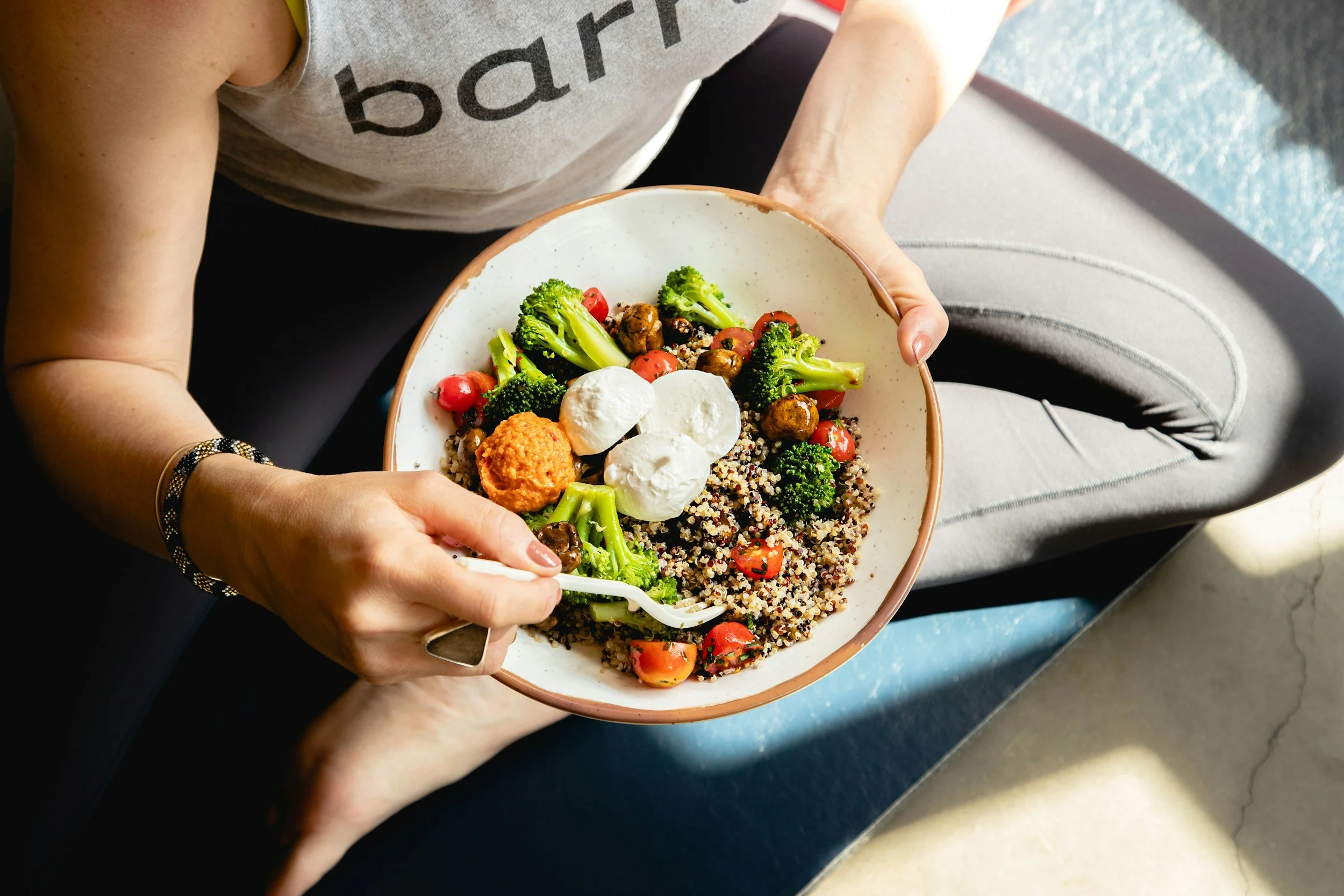
Without GLP-1s fluctuations in blood glucose can return and a sharp dip in blood glucose will lead to intense hunger and poor food choices. Eating regular, balanced meals that pair protein and fibre with complex carbohydrates, avoiding skipping meals and being cautious about high-sugar, low-fibre foods will help leep blood sugar levels balanced.
3. Eat In A Truly Satisfying Way
Restriction based approaches that worked under the appetite suppression of the medication are unlikely to be sustainable when appetite returns. The goal is not to eat as little as possible but to eat in a way that meets your nutritional needs, supports your energy and mood and makes you feel genuinely well nourished. That’s a very different mindset and it tends to produce much better long term outcomes.
4. Address Gut Health
GLP-1 medications slow gastric motility and some of this effect may persist for a period after stopping. Supporting gut health through adequate fibre, fermented foods and hydration is worthwhile during the transition.
5. Watch for Micronutrient Deficiencies
If you were eating significantly less for months, which most GLP-1 users do, there is a possibility that your intake of key micronutrients was inadequate - even if you were careful. Iron, B vitamins, calcium, magnesium and zinc are common areas of concern. Fatigue, brain fog and hair changes that emerged during the medication phase may reflect these gaps rather than being inherent effects of the medication itself - It’s worth reviewing this.
What Should You Eat After Stopping GLP-1s
Much of the discussion around GLP-1 weight regain focuses on the medication itself, but the nutritional transition afterwards is just as important.
Stopping a GLP-1 medication does not have to mean undoing your progress. The research is clear that what happens in the first twelve months post cessation has a significant influence on where your weight ultimately settles.
This window is an opportunity and not an inevitability of regain.
Focus on the foundations: adequate protein intake, structured resistance exercise, blood sugar stability, gut health and a sustainable approach to eating.
Please note that the specifics matter and they are individual.
What your body needs as it adjusts will depend on how long you were on the medication, how much lean mass you retained and what your eating patterns look like now.
If you are in this transition, or approaching it, it’s important to have a nutritional strategy in place is before the appetite fully returns and before old patterns have a chance to re-establish themselves.
Ready to Maintain Your Weight Loss After GLP-1 Medication?
I offer personalised nutrition support specifically for people using or transitioning off GLP-1 medications. We will look at what you are eating now, where the gaps are and how to build a way of eating that supports your energy, your muscle, and your weight long after the prescription ends.
Book a free 15-minute discovery call or send me any questions → TAP HERE
FAQ
Will I regain weight after stopping GLP-1 medication?
Research suggests some weight regain is common, particularly in the first 6–12 months after stopping. The difference between clinical trials and real-world outcomes likely comes down to how much weight was lost in the first place and, critically, what lifestyle changes were consolidated during treatment. The first twelve months after stopping is where trajectory tends to stabilise and where nutritional support has its greatest impact.
Why does appetite increase after stopping Wegovy or Ozempic?
GLP-1 medications suppress appetite and slow stomach emptying. When the medication is stopped these effects fade and hunger hormones can increase.
How can I maintain weight loss after stopping GLP-1 medication?
Maintaining lean muscle mass, eating adequate protein, stabilising blood sugar and following a sustainable eating pattern all appear to improve long-term outcomes.
Do you you have any other nutrition support options?
Yes! If you would like a cost effective introduction to nutrition and GLP-1s I have an online course that is priced at just £30 - click here for details
How much protein do I actually need and how do I hit that target when my appetite is still low?
Current guidance from the 2025 joint advisory by the American College of Lifestyle Medicine and the American Society for Nutrition recommends 1.2 - 1.6g of protein per kilogram of body weight per day during and after GLP-1 treatment. This is higher than the standard dietary reference intake, and deliberately so, given the muscle loss risk. For a 75kg woman, that translates to roughly 90 - 120g of protein daily. If your appetite is still suppressed, the most practical approach is to prioritise protein dense foods that are easy to eat in small amounts: Greek yoghurt, cottage cheese, eggs, edamame, tinned fish and tofu all deliver significant protein without requiring a large portion.
Should I take any supplements after stopping?
Quite possibly, yes and this is an area that deserves more attention than it typically receives. A 2025 review confirmed that more than 20% of people on GLP-1 medications developed a diagnosed nutritional deficiency within twelve months. Given that appetite suppression and reduced dietary variety can compound pre-existing deficiencies, the nutrients most worth reviewing are: vitamin D (especially relevant for perimenopausal women), iron, B12, magnesium and zinc. A good quality multivitamin and mineral supplement is a reasonable baseline for most people coming off these medications, but I would always recommend testing first where possible supplementing blindly is less effective than addressing a confirmed gap. If muscle loss is a concern, emerging evidence also supports creatine monohydrate as an adjunct to resistance training for lean mass preservation. As always with any supplement please discuss with your health care provider to check for any interaction with your current health and medications.
How do I know if I’ve lost significant muscle mass?
Scale weight alone does not tell you this, which is why I am cautious about using it as the sole measure of progress. Common signs that lean mass may have been compromised include noticing that you feel physically weaker than before your weight loss, reduced stamina on everyday tasks, feeling disproportionately tired or observing that your body composition looks “softer” even at a lower weight. Practically speaking, if you were not doing consistent resistance exercise during your time on the medication, there is a meaningful chance that some muscle was lost alongside the fat but this is recoverable.